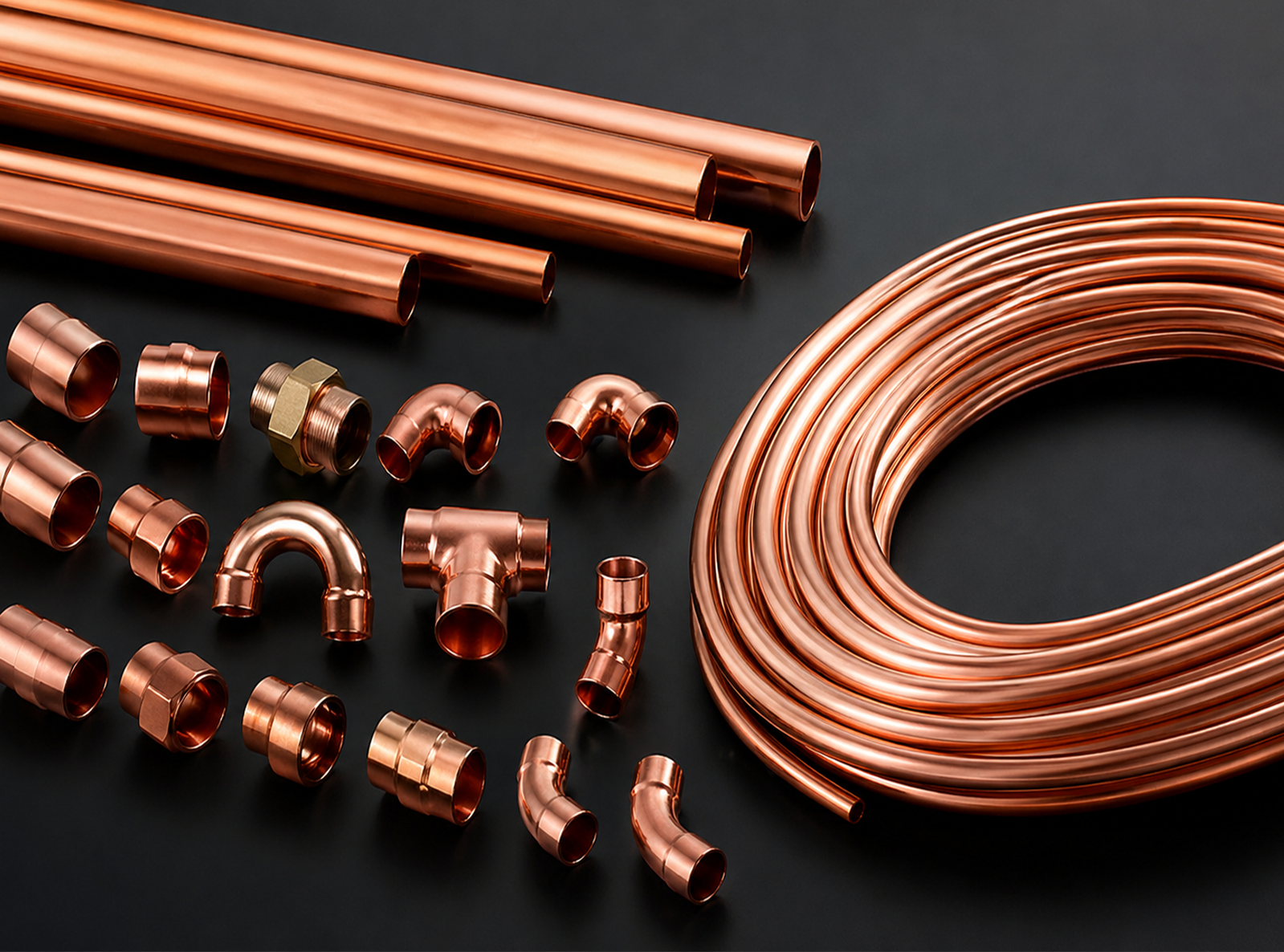


Copper pipes are considered among the most important materials used across various sectors, especially in air conditioning and refrigeration systems, as well as gas installations. This is due to their unique properties that combine durability, flexibility, and high efficiency in heat transfer.
Copper is known for its excellent thermal conductivity, making it an ideal choice for HVAC systems, where it helps improve performance efficiency and reduce energy consumption. Its high resistance to corrosion also ensures a longer lifespan compared to other materials, even in harsh environmental conditions.
One of the key advantages of copper pipes is their ease of shaping and installation. They can be bent and connected with flexibility without compromising their quality, which simplifies installation and maintenance processes. In addition, copper is a safe and hygienic material, as it does not react with water or release harmful substances, making it suitable for potable water systems.
Copper also has natural antibacterial properties, enhancing hygiene and safety in the systems where it is used. Moreover, it is 100% recyclable, making it an environmentally friendly choice that supports sustainability efforts.
Copper pipes are used in a wide range of applications, including cooling and air conditioning systems, water networks, gas systems, and fire protection systems. With the continuous development in the construction and energy sectors, copper pipes remain a reliable, high-performance choice.